SALT & PEPPER
An interaction experiment
2018.
What if salt and pepper shakers are autonomous?
Background
This project took place in a seminar during my study. The topic was about interaction with autonomous objects. Students were first required to pick up an everyday object. Then design the behaviors of the object if it becomes perceptive, responsive, knowledgeable, and motivated for its own needs. The goal of the seminar is to build a prototype of the autonomous object and reflect upon the interaction with it. Therefore, the students could have more insight into autonomous object design.
We were a group of 5, my contributions were conceptual design, UX design, system design, and programming.
We picked salt and pepper shakers as our target. After brainstorming, we decided to assign the salt and pepper shakers following characteristics:
- The shakers do not like to be shaken too fast, so the user will not likely add too much salt or pepper on their food; also, the shakers will be less likely damaged.
- They have the need to stay together, so the table surface will look tidy.
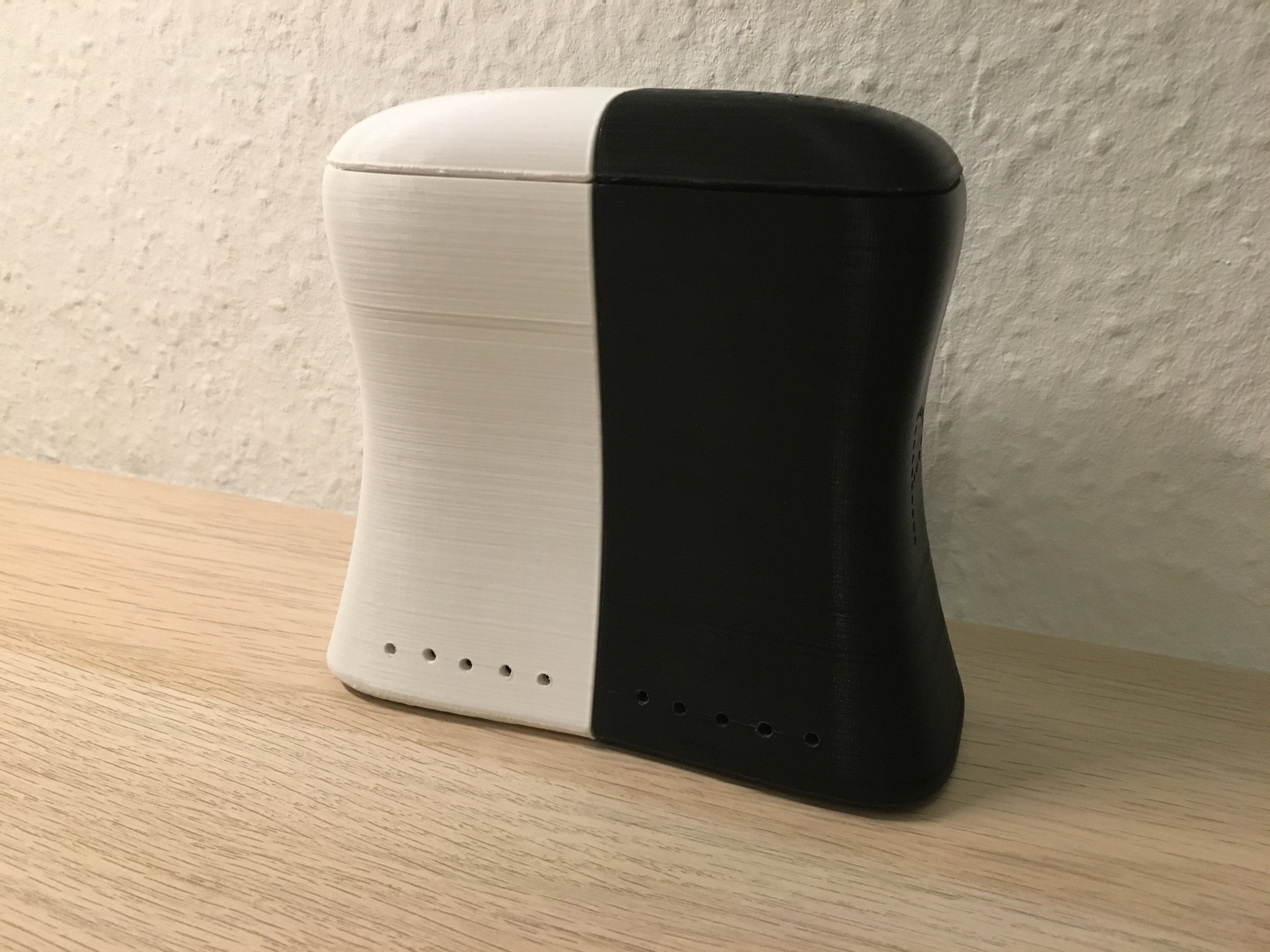
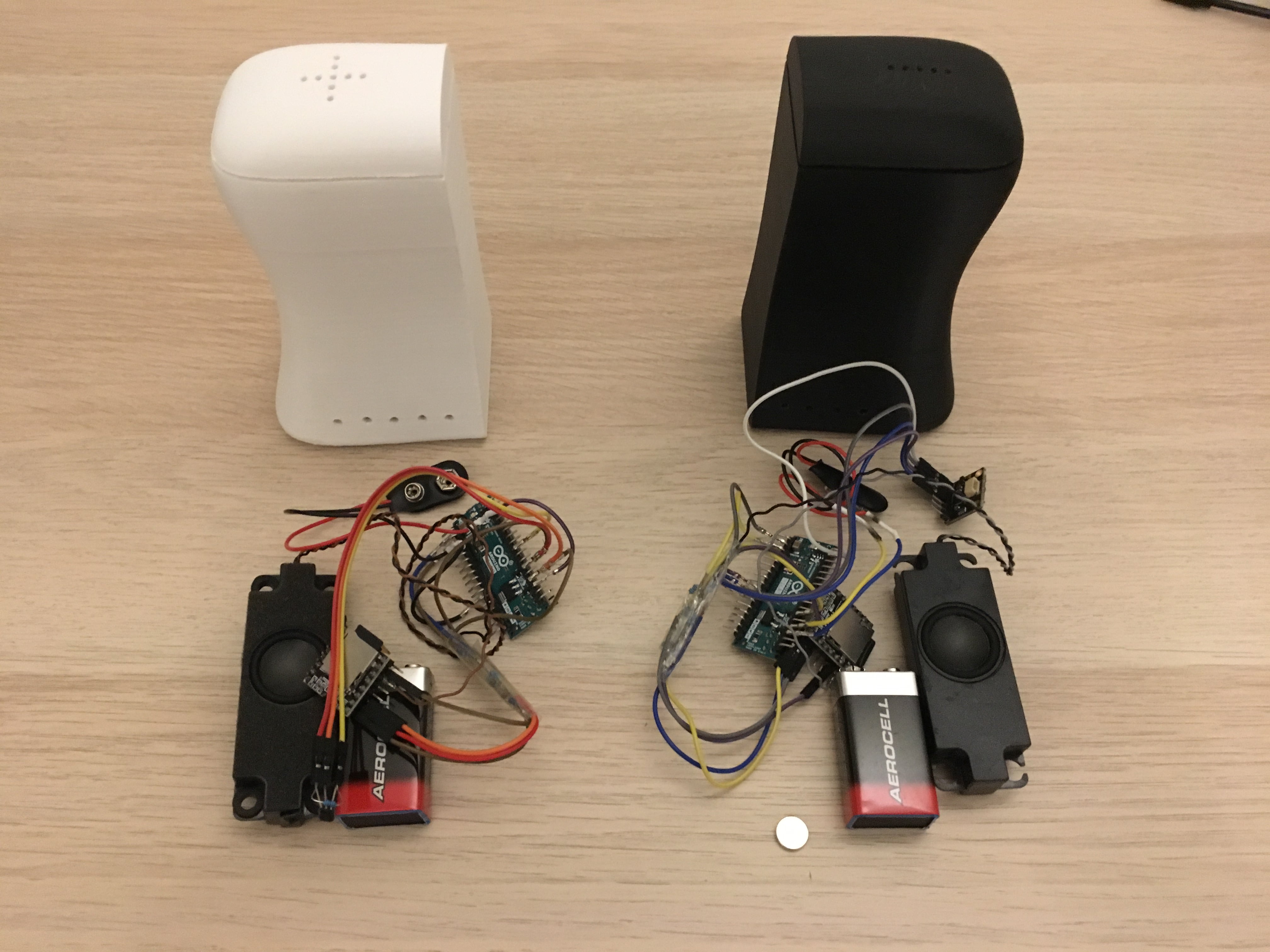
To let the shakers feel and react, they need the inertia measurement units to sense the movement, speakers to speak, hall effect sensor to detect separation, and microcontrollers to control the events. Besides, we had to design and 3D print two relatively big shakers to keep all the hardware inside. We designed the two shakers together as one unit to imply that these two shakers should stay together, which matches the first characteristic.
Reflections
This project made me realize that autonomous objects might have the potential to change users' behaviors. I personally was able to build empathy with the two shakers. Empathy might come from the human voice. I was always aware that these two shakers want to stay together and they want to be treated gently. If I did it wrong, I assume they will not be happy. So, because of sympathy, I wouldn't put one shaker away from the other or shake the shaker fast. I could imagine if I kept using these two shakers, I might have developed a new habit, a better habit, which makes my table tidier, my diet healthier, and my shakers last longer. Therefore, human-like behaviors of the object might help people build empathy with the object, and the object might then help people change their behaviors by sympathy.
Hardware list:
- Arduino Micro
- MPU9250 IMU
- DFPlayer Mini
- A3144 Hall-Effect Switch